Our nation is losing women from the STEM pipeline early and at an alarming rate. This greatly limits career opportunities for women and leaves a gaping hole in the U.S. STEM talent pool.
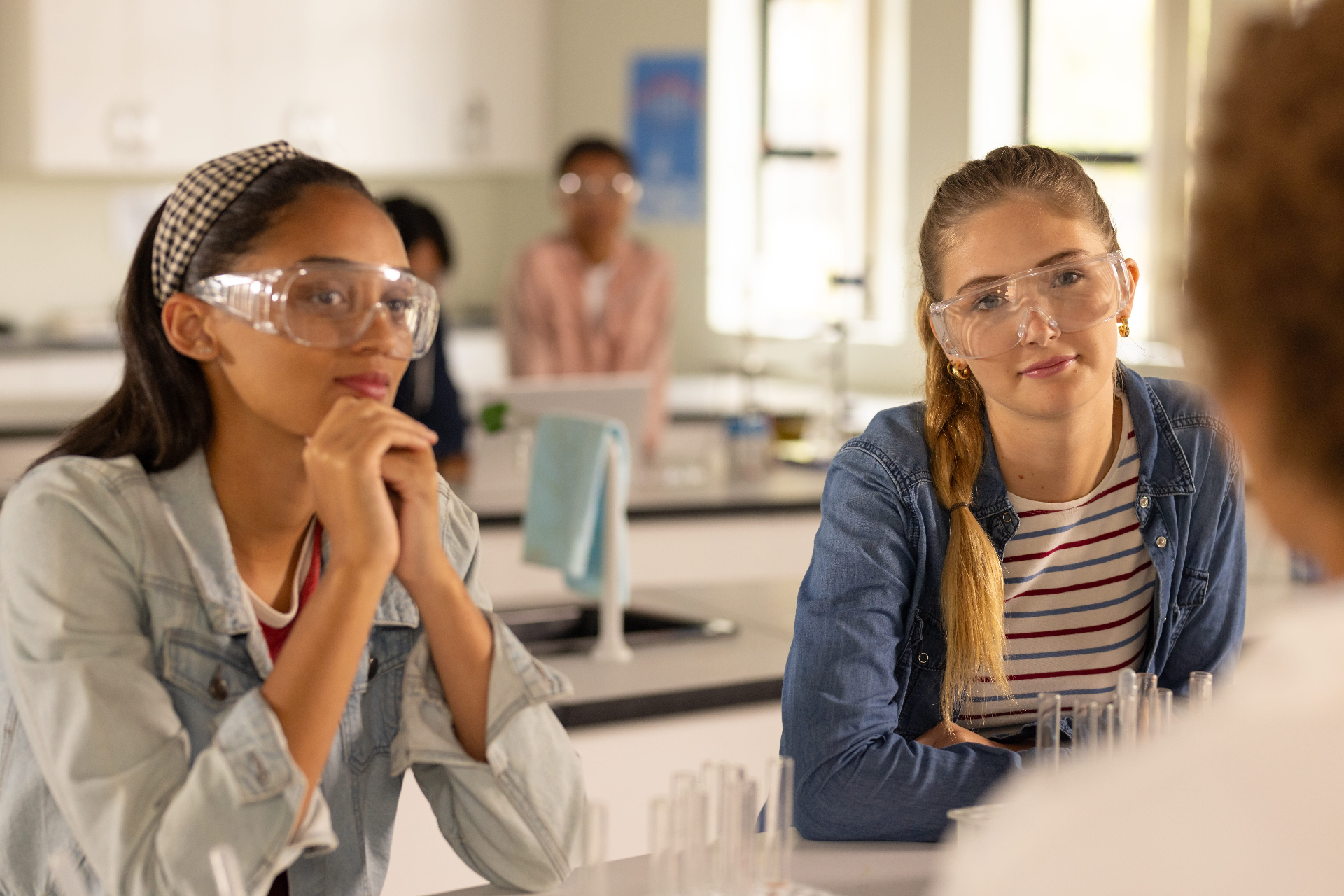
Innovation, economic growth, and workforce readiness increasingly depend on strong participation in science, technology, engineering, and mathematics (STEM). Yet research shows that many students disengage from STEM pathways long before career decisions are made.
Expanding access to high-quality STEM learning experiences helps ensure skill — not access to resources — determines who pursues careers in these fields.
Demand for skilled STEM professionals continues to grow, with more than one million new STEM-related jobs projected in the coming decade.
At the same time, participation trends show that many young women disengage from STEM during their school years, reducing both career opportunities and the diversity of perspectives that drive innovation.
Research consistently demonstrates that diverse teams produce stronger problem-solving outcomes and more effective innovation across industries.
Studies indicate that girls’ interest in STEM often remains strong in early childhood but declines during middle and high school years.
Studies indicate that girls’ interest in STEM often remains strong in early childhood but declines during middle and high school years.
Confidence gaps in math and science emerging as early as elementary school
Self-selection out of advanced STEM coursework during adolescence
Limited access to hands-on, experiential learning opportunities
Reduced exposure to real-world STEM applications
Hands-on programs and sustained engagement during these stages can significantly influence long-term participation.
Exposure to role models plays an important role in shaping career aspirations.
Research shows that many students have limited exposure to women working in STEM professions, and educational materials frequently underrepresent women in scientific careers. These factors can influence whether students envision themselves pursuing STEM pathways.
Increasing visibility, mentorship, and practical experience helps students connect classroom learning to future opportunities.
Although women represent nearly half of the overall workforce, they remain underrepresented in many STEM professions.
Strengthening participation across the education pipeline helps expand opportunity for individuals while supporting innovation and workforce development nationwide.
High Tech Rising addresses these challenges by investing in programs that provide hands-on STEM experiences, mentorship, and sustained learning opportunities at critical points in students’ educational journeys.
Through strategic grantmaking and initiatives such as Oh Snap!, we support programs that help students build confidence, develop technical skills, and explore future careers in STEM.


